
Can you be successful while simultaneously failing as a leader?
The Social Network piques the interest of this very question. The movie takes us through Mark Zuckerberg’s mega-rise, while also showing us the destruction left to get there. Throughout the viewing journey, we see the startling difference between an emotionally intelligent leader and one with only technical intelligence. As Zuckerberg continues to climb in leadership, he sees more spoils, yet becomes more and more isolated. In a crowded room, he’s never felt more alone.
To comprehend how the isolation gets so deep, we must look at the cementing scene of the movie. We see Zuckerberg hack into Harvard, and create a website which was the first “version” of what we now know as Facebook. It was originally called Facemash and was a website for Harvard students where students’ pictures competed against one another to give them ultimately, a rating. It was during this creation though, we see both Zuckerberg and Co-Founder Eduardo Saverin contribute to the website. While Zuckerberg codes the website, Saverin gives the necessary algorithm to make the “matchup” playable and accurate.
It’s in the same scene that we see their dynamic shine. Zuckerberg has just gone through a breakup and Saverin, a friend, runs to his dorm to ask him if he is okay. What does Zuckerberg reply? “I need you… I need the algorithm you used to rank chess players.” This scene alone introduces the deeper theme: the divide between technical and emotional intelligence.
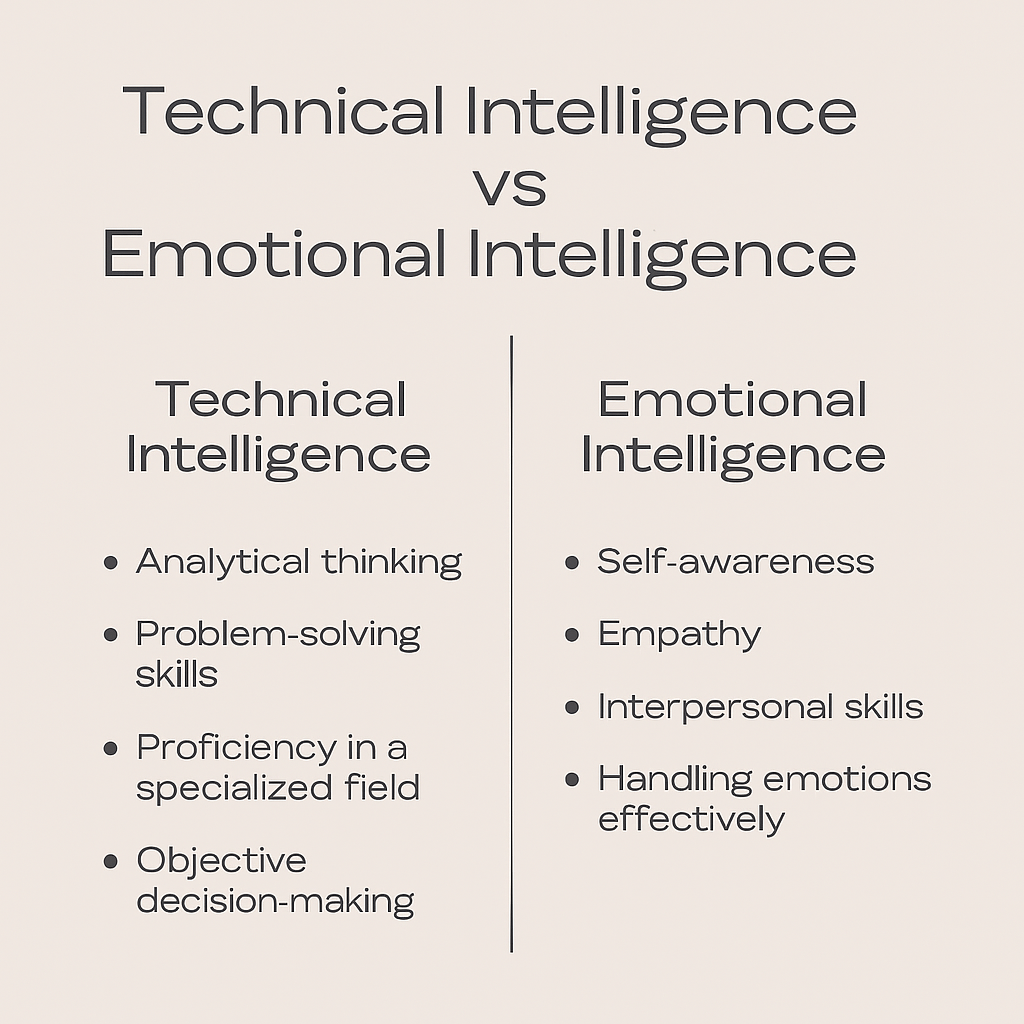
Zuckerberg is a technical genius but lacks emotional understanding. We see this throughout the movie, his lack of emotion in the depositions and when his best friend was hurt by being cut out of the company. Zuckerberg could not understand why Eduardo was so upset, because it was a ‘business decision.’ Zuckerberg saw Saverin as making bad decisions for the company and felt justified cutting him out. He lacks emotional empathy and we see it in many scenes, like his breakup scene with Erica where he doesn’t read her emotions and shows no empathy towards her. We see Zuckerberg start to cut out Saverin in the business meetings and does not care to involve him anymore. He doesn’t have enough respect to even include him in the decision to move Facebook to California.
Saverin is emotionally intelligent (as well as technical), but undervalued. We see him throughout the movie be emotionally aware, just not so assertive with business matters. He can make them and understand at the same time, the emotional implications of those decisions. We get to see Eduardo’s true character throughout the movie. He defends Mark in front of a Harvard disciplinary board. We watch him fund the startup with his own money because he believed in Mark and the vision.
A quote we see after the betrayal really shows how deeply hurt he was, “I was your only friend. You had one friend.” Saverin was blindsided, especially seeing himself and Mark as best friends, maybe even Mark’s only true friend. We see Eduardo truly committed to Facebook, with loyalty at the forefront of his character. A characteristic Zuckerberg could not truly understand with his low emotional intelligence.
What does the Research say?
Here’s a startling wakeup call from Sabin (2020), “The emotional intelligence of an executive rises as they climb managerial positions, peaking at manager level and dropping significantly to the CEO position.” Technical IQ can create an idea; it can even create success. But it can not have sustainability. Emotional intelligence is what creates long-term retention through personal relationships. This is supported in Finn (2023), “Research has also shown that employees with emotionally intelligent managers are far more likely to stay at their jobs.” Collaboration and culture are both easier when personal investment is present. A leader with EQ (Emotional Quotient), is more likely to be trusted and receive effective feedback. These leaders are able to conduct conflict resolution and offer support to employees. This contributes to a larger picture of a better work environment.
Technical skill alone is not enough to land a job anymore. Hiring teams are looking for people with those intangible skills like EQ, humility, social skills, etc. Sabin writes, “Emotionally intelligent leaders lead higher performing teams” (2020). This is a call to hiring teams to look for these emotionally intelligent applicants, as it can save the company thousands in employee turnover and boost productivity and motivation, therefore boosting profit.
What does an Expert Say?
I invited Ellie Holbert, an organizational effectiveness consultant, to weigh in on this topic. Holbert has twelve years of experience in the field, nine of those in consulting. She is the founder, CEO, and Principal Consultant of Empact Advisory Services. Holbert has a true passion for creating a healthier workplace. Her focus within organizational effectiveness is leadership coaching and team effectiveness, making her the perfect person to contribute to this talk. She is now taking her passions and talents into a new role: mother. While this is a different job, she is more passionate and proud than ever.
When asked whether someone can be a high performer but a poor leader, Holbert (personal interview, July 7, 2025) stood firm in her stance:
I don’t believe it’s possible to be a poor leader and still be considered a high performer- assuming the person is in a leadership role. If someone lacks strong leadership skills but is in an individual contributor role, that’s a different matter. As long as they’re not responsible for managing others, that can be acceptable. However, when someone is in a leadership position and demonstrates poor leadership – even if they meet or exceed individual metrics- that is not acceptable.
Holbert then expands on the creation of a dangerous precedent of retaining toxic leaders just due to their technical skills and performance on paper:
Poor leadership diminishes the contributions of everyone around them. It prevents others from bringing their best ideas, doing their best work, and creating value for the organization. Even if one person appears to perform well individually, it’s impossible to fully quantify the damage they inflict on the broader team- the opportunity cost of what others could have achieved in a healthier environment.

Holbert gladly shared her view and personal experience on what matters more in long-term leadership: emotional intelligence or technical genius. She shares the view that emotional intelligence wins out:
…in my experience, strategic thinking can often be developed and honed more quickly than emotional intelligence. Thankfully, emotional intelligence can also be developed. It’s a set of skills that can be taught, but it takes significant intentionality, practice, and often coaching. By contrast, strategic thinking and technical expertise tend to be easier and faster to teach and adopt.
Her insight mirrors the theme of The Social Network where we get to see the first hand effects of valuing technical genius over emotional intelligence.
Lastly, it was asked if companies prioritize emotional intelligence enough when hiring and promoting leaders, Holbert has seen different approaches among varying organizations:
I’ve seen some companies prioritize emotional intelligence explicitly in their career development frameworks…For example, my former employer- a technology and consulting firm- did an excellent job integrating emotional intelligence into promotions. Their career development framework included specific, observable behaviors and competencies tied to creating a psychologically safe environment, demonstrating empathy and compassion, supporting direct reports through challenges, and having difficult conversations…
(There are) others that completely miss the mark… Many organizations don’t adequately prioritize emotional intelligence because they find it hard to quantify. Often, there’s discomfort around defining and requiring certain social and emotional skills at work.
Holbert wraps with a positive and optimistic note:
Fortunately, there’s growing awareness and support in the talent development space to address this. I’m optimistic that more organizations are starting to recognize emotional intelligence as a core competency- not a “nice-to-have,” but an essential driver of leadership effectiveness.
Holbert’s viewpoints only further the narrative that leadership is not solely rooted in trophies and performance on paper, it is how we create healthy environments and uplift those around us. That’s where we see true leaders.
Where Does this Leave Us?
The Social Network is more than just a dramatized biopic on Mark Zuckerberg. It’s an illustration of the dangers in leadership from hiring technical brilliance over emotional and intangible traits. And while we all know Facebook and Zuckerberg to be largely successful, we have to ask ourselves: At what cost was it worth it? How many toes do you have to step on to become successful? How many friends must you throw away? When do you start forgetting the people who got you to where you are? Zuckerberg became successful, but he only had to sacrifice his only true friend to do it.
Technical intelligence can make you successful, but it can’t build meaning, loyalty, and trust. Emotional intelligence is what keeps leaders in position for a long time. People want leaders they can trust. Employees stick around longer for people they respect. The movie really makes us look around and ask ourselves what boss would we rather have: The one who sacrifices trusted friends to get them where they are, or the one who brings people with them to the top? Leadership isn’t just about how high you can climb, it’s when you look around and see who’s standing with you that’s important.
After all, leaders with no followers are… nobody.
References
Finn, L. M. (2023, July 11). Emotionally intelligent leadership and employee retention. Forbes. https://www.forbes.com/councils/forbeshumanresourcescouncil/2023/07/11/emotionally-intelligent-leadership-and-employee-retention/
Sabin, S. C. (2020, October 22). 4 reasons emotionally intelligent leaders impact the bottom line. Entrepreneur. https://www.entrepreneur.com/leadership/4-reasons-emotionally-intelligent-leaders-impact-the-bottom/357371
Sony Pictures Entertainment. (2010). The Social Network [Film]. United States.
 The Human Workplace
Leave a comment